
Confused between anatase and rutile titanium dioxide? Learn the cost advantages, indoor applications, chemical features, storage rules and bulk sourcing tips for paper, indoor paint and plastic manufacturers.
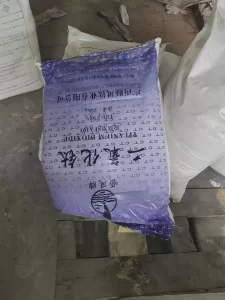
When Should Factories Choose Anatase Titanium Dioxide Instead of Rutile TiO₂?
Procurement managers from paper mills, indoor coating factories, food plastic manufacturers and textile processing plants often ask this key question: Is anatase titanium dioxide still valuable in modern pigment production, and which production lines suit it better than high-cost rutile grade TiO₂?
Anatase Titanium Dioxide (anatase TiO₂) is a white inorganic pigment with crystal structure different from rutile titanium dioxide, chemical formula \(\boldsymbol{TiO_2}\). It features lower production cost, superior light whiteness, and unique photocatalytic activity, while lacking strong UV shielding and outdoor weather resistance. This article fully sorts out its core characteristics, exclusive industrial application scenarios, obvious gaps compared with rutile TiO₂, and bulk procurement suggestions for industrial buyers.
What Unique Crystal Properties Does Anatase Titanium Dioxide Have?
- Ultra-high initial whiteness: Anatase TiO₂ delivers brighter, cleaner pure white tone without slight yellow undertone, ideal for products requiring bright snow-white appearance.
- Strong photocatalytic activity: Its crystal structure enables photocatalysis under UV light, widely applied in air purification, sewage treatment and self-cleaning coating formulas.
- Low refractive index vs rutile grade: Lower hiding power, but the unit raw material price is much more competitive for large-volume indoor production.
- Poor outdoor weather resistance: Long-term exposure to sunlight will cause chalking, yellowing and powder falling, so it is only suitable for indoor enclosed usage environments.
- Good hydrophilicity: Easy to disperse in water-based systems such as paper coating and waterborne indoor paint.
Core Industrial Application 1: Paper & Paper Coating Production
Paper manufacturing is the largest consumption market for anatase titanium dioxide:
- High whiteness improves the brightness and opacity of coated art paper, printing paper, cigarette paper and decorative wallpaper base paper.
- Excellent water dispersibility mixes evenly with paper pulp without particle agglomeration, avoiding white speckles on finished paper surface.
- More cost-effective than rutile TiO₂ for mass paper mill continuous production, greatly reducing paper raw material cost per ton.
Core Industrial Application 2: Indoor Water-Based Coatings & Latex Paint
Indoor wall latex paint, furniture primer and interior decorative coating factories prefer anatase TiO₂:
- It creates bright, soft white interior wall finishes with pure white color without yellow tint.
- Water-based anatase grade disperses perfectly in aqueous paint formulas, reducing grinding time and production energy consumption.
- Since indoor walls are not exposed to direct strong UV radiation, the poor weather resistance of anatase will not cause product defects within the service life of indoor paint.
Core Industrial Application 3: Food-Grade Plastic, Medical & Daily Cosmetic Raw Materials
Food contact plastic film, disposable tableware, toothpaste and mild skincare cosmetics adopt food/pharma grade anatase TiO₂:
- High purity low-heavy-metal anatase titanium dioxide complies with international food additive safety standards.
- Mild chemical inertness ensures no harmful precipitation when contacting food, oral and skin products.
- Its bright white tone enhances the appearance of toothpaste, facial cream and plastic food containers.
Other Special Industrial Uses of Anatase Titanium Dioxide
- Photocatalytic Environmental Materials: Used for air purification filter media, wastewater degrading agents and self-cleaning indoor coating due to strong photocatalytic performance.
- Synthetic Fiber & Textile Delustering Agent: Added into polyester, nylon fiber spinning liquid to eliminate fiber transparency and achieve matte white textile fabric effect.
- Low-cost Indoor Plastic Products: Indoor plastic toys, storage boxes and household plastic parts that never contact outdoor sunlight use anatase TiO₂ to cut raw material expenses.
Clear Comparison: Anatase VS Rutile Titanium Dioxide
Most buyers cannot judge which grade matches their production line. We summarize practical differentiation standards for factory reference:
- Outdoor service demand: Choose rutile TiO₂ for exterior paint, outdoor plastic, automotive coating; only select anatase for fully enclosed indoor products.
- Budget & cost control: Anatase has lower unit price, perfect for mass low-to-medium-end indoor production; rutile carries higher cost for long-durability outdoor goods.
- Photocatalysis requirement: Only anatase TiO₂ has obvious photocatalytic performance for environmental purification materials; rutile has nearly zero photocatalytic activity.
- Hiding power demand: Rutile owns much stronger tinting and hiding power, less dosage needed to cover dark base materials; anatase requires higher addition rate for equal opacity.
Safe Storage & Handling Guidelines For Anatase Titanium Dioxide
- Store anatase TiO₂ powder in dry, cool, ventilated warehouses. Use PE lined woven bags or ton jumbo bags to seal tightly and prevent moisture absorption caking.
- Wear dust-proof masks and protective goggles during powder feeding and grinding to avoid long-term inhalation of fine white pigment dust.
- Separate storage from colored metal ores and dark raw materials to prevent cross-contamination and color speckles on finished products.
- For food/pharma grade anatase TiO₂, independent clean storage area must be arranged to avoid mixing with industrial toxic chemicals.
FAQ
Q: Can anatase titanium dioxide be used for exterior wall paint?
A: Not recommended. Continuous outdoor UV radiation will make the paint film chalk, turn yellow and lose gloss within 1-2 years, resulting in massive customer complaints. Rutile grade is the mandatory choice for all outdoor coating products.
Q: Why is anatase TiO₂ used for photocatalysis instead of rutile?
A: The band gap energy of anatase crystal structure enables efficient generation of active free radicals under ultraviolet light to decompose organic pollutants, while rutile TiO₂ has weak photocatalytic activity and cannot meet purification material requirements.
Conclusion
Anatase titanium dioxide is a cost-effective white pigment targeting indoor closed production scenarios such as paper coating, interior latex paint, food plastic and photocatalytic environmental materials. Its bright pure whiteness and affordable price bring obvious cost advantages to factories without outdoor durability demands.
If you need industrial grade or food grade anatase titanium dioxide with stable purity, complete COA & TDS certificates, customized packaging and factory bulk quotations, contact our technical sales team for free test samples and professional formulation guidance.